Can EU Regulation Stop Facial Recognition Systems?

Artificial intelligence (AI) is fueling the spread of biometric technologies, including facial recognition applications used for verification, identification, and categorization by both private companies and public institutions. Although the facial recognition market is poised for massive growth over the coming years, the technology has become a central issue in the global debate around biometric surveillance, with a large pan-European citizens’ movement already calling for an outright ban.
The supposed benefits of using facial recognition systems for public safety are undermined by their intrusiveness and documented unreliability. These shortcomings raise serious questions concerning violations of people’s rights to data protection and personal privacy.
The EU Legal Framework: Real Protection or Window Dressing?
To address the above concerns, the EU has put in place rules under the Charter of Fundamental Rights of the European Union (CFR), the General Data Protection Regulation (GDPR), the Law Enforcement Directive (LED), and the EU Anti-Discrimination Framework. All of these also apply to processes and activities linked to facial recognition.
Many human rights organizations question whether these EU rules are actually effective in dealing with facial recognition systems. The concerns around citizens’ rights run deep, and even though the courts have tried to fill the gaps through various interpretations of pre-existing legal frameworks, many doubts remain.

In this context, the EU’s AI Act aims to limit the use of biometric identification systems—including facial recognition—that could lead to pervasive surveillance. The Act, adopted in 2024 and now phasing into force, sets new rules governing the use of facial recognition in the EU and differentiates between “high-risk” and “low-risk” use cases. In public spaces, use for law enforcement purposes is banned, unless member states choose to authorize it on grounds of public security.
A wide range of facial recognition technologies used for purposes other than law enforcement (such as border control, public transport, and even schools) can be permitted following a conformity assessment.
Human rights organizations are questioning the distinction between low-risk and high-risk biometric systems and warn that the legislation allows a system of standardization and self-regulation without proper oversight. Stricter implementation is being pushed for, including regarding the amount of leeway that member states have in applying the new rules, making it easy to skirt their citizens’ freedoms and privacy rights.
The Real Picture: Mass Surveillance Sold as Progress
But how do things actually stand? The digital surveillance that the EU falsely claims to contain and regulate while publicizing new privacy protection laws through the media is little more than a weak attempt to reassure concerned European citizens.
We must remember that, much like Smart Cities, facial recognition is baked into Agenda 2030, and EU member states won’t have the option to push back as their sovereignty gives way to transnational bodies like the UN. Independent outlets have already shown how the WEF successfully promotes facial recognition and digital IDs to governments and business leaders around the world.
Facial Recognition Is Already Live in European Cities

Facial recognition systems are already active in many European cities, most of which have already rolled out various “smart city” plans.
- In Italy, Venice tracks cell phones and uses hundreds of cameras to monitor tourist movements around the lagoon city.
- In Germany, police in Saxony and Berlin are using live facial recognition to identify people in near real time.
- In the Netherlands, smart street surveillance is on the rise, with cameras that claim to “recognize” violent behavior.
- In Spain, Madrid has installed 83 AI-equipped cameras across the city.
- In France, police have come under fire for using facial recognition on their smartphones during routine identity checks.
Smart Cities Are Surveillance Cities

It is becoming obvious that personal privacy in these new smart city models suffers seriously on multiple fronts. Looking at current technological trends, data collection practices, and the public’s resignation across European nations, it is clear that governments, companies, and individuals will increasingly experience the dangers that come with tracking technologies and their abuse.
The quantification of human life through digital information is still dominated by marketing or management goals that often clash with individual privacy. This profit-driven use of data is likely to objectify neighborhoods and infrastructures, with adverse social ramifications for everyone who lives there.
This article aims to spotlight the negative impact that WEF-aligned smart city programs have on personal privacy and information security. The collection, processing, and transmission of huge amounts of data in smart cities can lead to severe compromises of personal privacy, an issue that has been largely brushed aside by the architects of these programs.
Privacy, that is, the ability to selectively expose oneself to the world, is considered a fundamental human right in many jurisdictions (especially in nations where democracy still has some meaning) and is protected in various ways by national legislation.
Unfortunately, transnational entities are slowly uprooting every form of privacy. To them, Orwell’s 1984 serves as a blueprint for the near future.
The Surveillance Toolkit
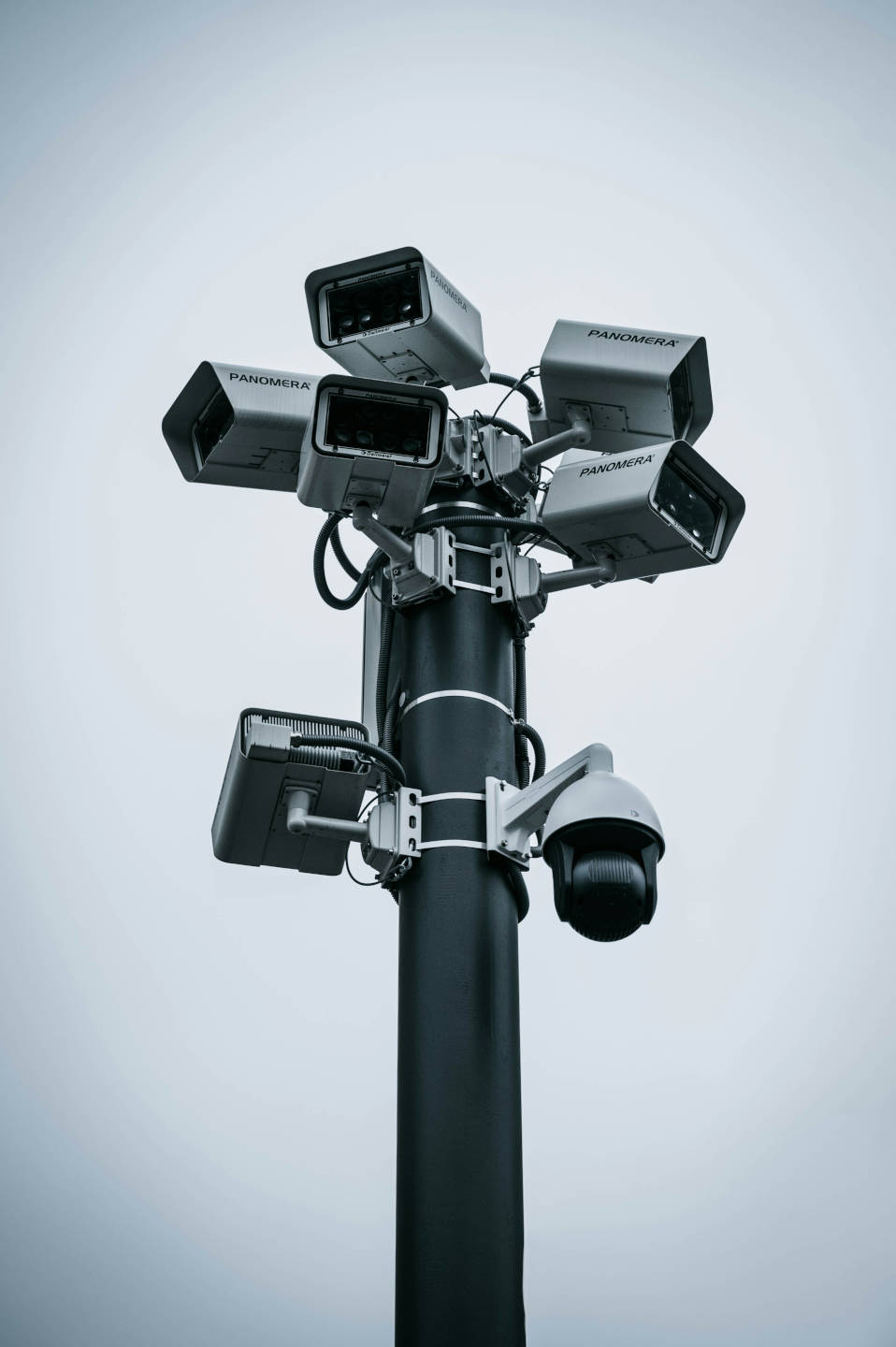
Take a simple example: data surveillance, the monitoring, collection, and analysis of data and metadata on a personal or collective scale, primarily through online platforms and social media. The impact of data processing and IT systems on personal and mass surveillance is enormous. It is directly tied to the practice of “profiling”, which does not require monitoring an already identified individual for a specific purpose but rather focuses on identifying individuals of interest who can later be put under targeted, personalized surveillance.
Geo-surveillance is intensifying as well: the monitoring of a person’s location, their vehicles, and their interactions. Cities are flooded with digital cameras capable of zooming, panning, and tracking individual people. These cameras are operated remotely and linked to AI systems. Moreover, vast portions of the road network and vehicle movement are watched by additional cameras. The analysis and interpretation of all this data is then supported by biometric facial recognition algorithms.
For more on how this is being rolled out continent-wide, see this overview of smart city rankings and technologies in Europe.
Protect Your Biometric Data

You don’t have to accept a world where you’re constantly being scanned, profiled, and tracked every time you step outside. IR Eyewear offers a low-tech solution that is simple, stylish, and unmistakably “Italian style,” helping you shield your biometric data without giving up on how you look.
Shop the full IR Eyewear collection and take your face back from the cameras.
#Facial Recognition #Biometric Surveillance #EU AI Act #Smart Cities #Privacy